
How one plan runs a whole building.
GridVolt forecasts what your site will need and what power will cost, builds one plan for every system, and carries it out on site. Then it does it again, every 15 minutes.
1 of 4
It starts with a forecast.
Three things decide what your energy costs tomorrow: how much the roof will generate, how much the building will use, and the price of power in each half hour. GridVolt forecasts all three, 48 hours ahead.
2 of 4
Then it builds one plan for everything.
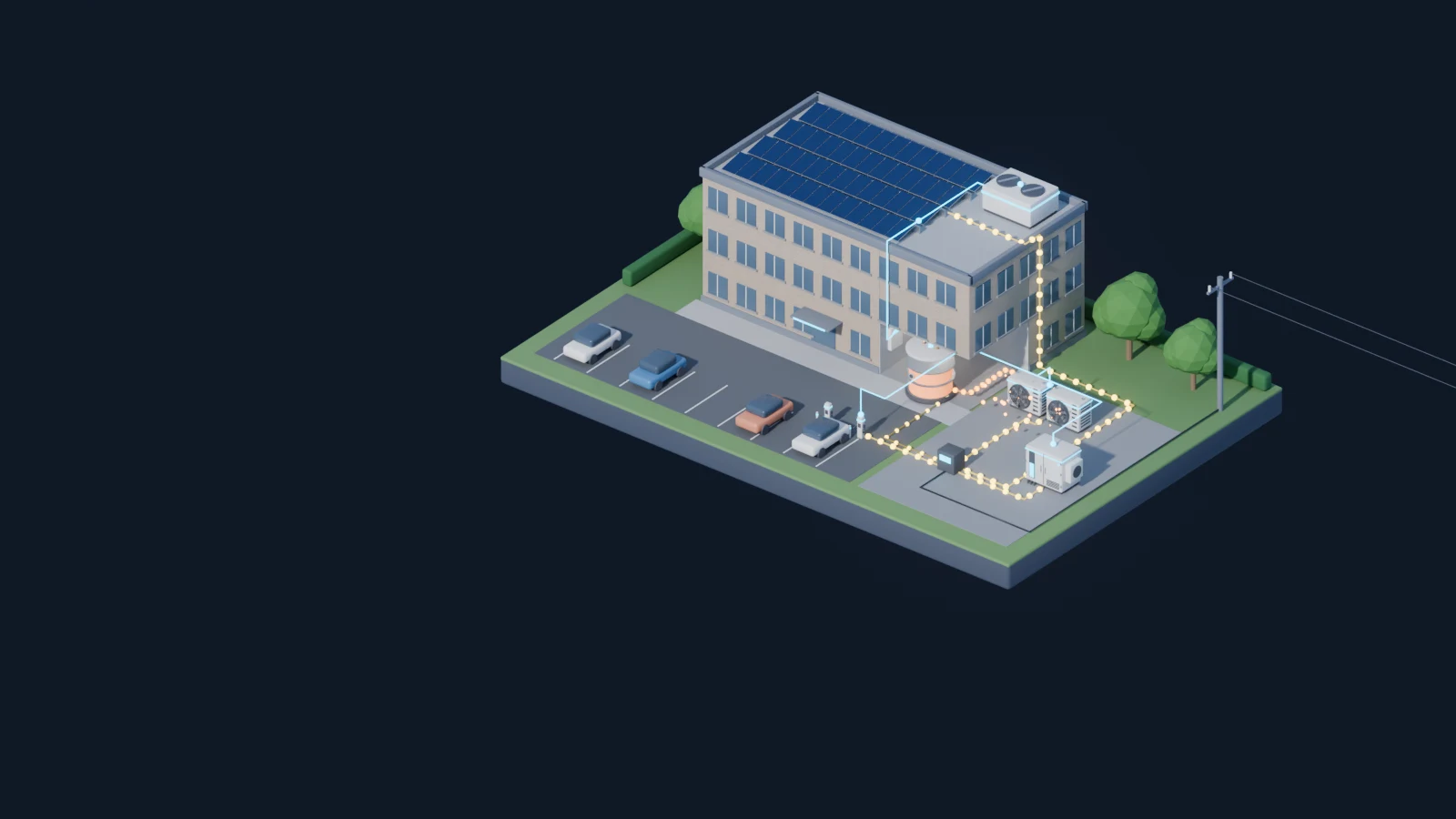
With the forecast in hand, GridVolt works out when each system should run so that, together, they cost the least and earn the most. Three examples from one day.
Solar is used before it is sold.
Exported solar earns very little. The same power used on site saves the full price of buying it. So the plan finds work for the surplus: it fills the battery, makes hot water, pre-cools the building and charges the cars, and only then exports what is left.
The battery is saved for when it is worth most.
The forecast shows the evening peak coming, and a grid event at five. The plan holds the battery back through the afternoon, then lets it carry the building through both. The site buys less at the most expensive time of day and is paid for helping the grid.

Heating and cooling run when they cost least.
A building holds heat and cold for hours: in its hot water tank, and in the building itself. The plan uses that. It heats and cools ahead of need, when power is cheap or coming off your own roof, then eases off through the most expensive hours. Comfort stays the same.
Timing changes how much power the job takes, too. A heat pump needs more electricity to make the same heat when the air outside is colder, so hot water made on a frosty night costs more than the same water made at midday. Chillers are the same: they use less power when the air outside is cooler.


3 of 4
It carries the plan out on site.
GridVolt talks to the equipment you already have: through the brand's cloud where there is one, or through a small controller installed at the building.
- Batteries and solar
- Through the brand's cloud, with nothing to install, or direct to the inverter.
- Heating and cooling
- Through your building management system, over BACnet or Modbus.
- EV charging
- Through the charger controller.
- Metering
- Live readings from every connected system, so the plan is checked against what is really happening.

4 of 4
And it shows you what it is doing.


See how you can ask it questions
Screens from a demonstration site.
Getting started.
A free assessment
We look at your site, your bills and your equipment, and show what the plan could save and earn.
Connection
A battery with a cloud connection needs no visit. Otherwise a small controller goes in and is connected to your systems. Nothing you own is replaced.
The first plan
GridVolt starts with the battery, learns how the site behaves, and brings the other systems onto the plan.
See what one plan would do for your site.
The free assessment starts with the battery and shows the rest of the building alongside it.
Get a free assessment